 About Us
 Contact us
 Delivery and payment
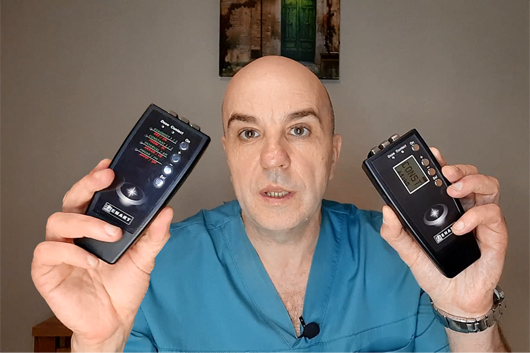
As a physician, I often hear the question: which device should I choose – the ENART 907 or the ENART 911?
I’ve been working with these devices for many years and use both models in my practice.
I’ll try to give a comprehensive answer – in simple terms, without unnecessary technical jargon.
Both devices in the ENART 900 series operate on the principle of biofeedback. They don’t impose external stimuli on the body, but rather respond to its response.
This isn’t just regular electrical stimulation – it’s a dialogue with the body.
The differences between models lie in the level of control, the depth of customization, and the ease of use for different tasks.
What do the ENART 907 and ENART 911 have in common?
Before discussing the differences, it’s important to understand what these models have in common.
Both models:
- operate on the principle of biofeedback
- help identify priority treatment zones (areas requiring attention)
- automatically determine when a sufficient response has been achieved
- have an audible indicator
- are suitable for both home use and professional practice
- are energy-efficient (the pulse turns off when removed from the skin)
- have a sensitivity adjustment function (SENS parameter), allowing comfortable use on any skin type – dry, wet, or hairy
Both the ENART 907 and ENART 911 allow you to work with:
- pain syndromes
- the musculoskeletal system
- the nervous system
- internal organs
- injury recovery
- fatigue and decreased tone
The differences begin where the depth of customization and visual control matter.
ENART 907-L2 – a reliable partner for many years to come
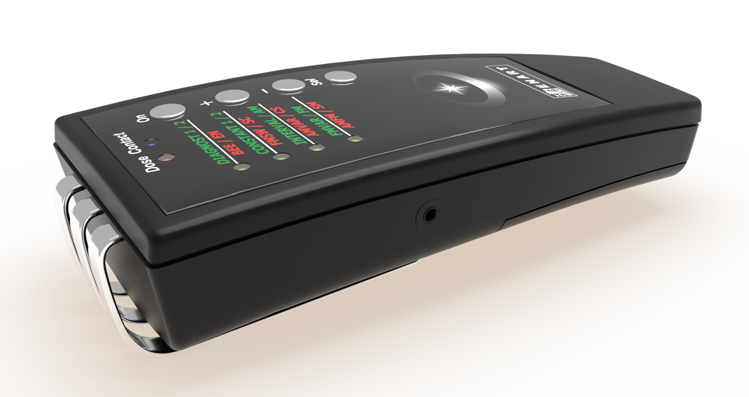
When I talk about the ENART 907, I always remember my first device – it still had a light-colored case.
It’s been working for 14 years without a single malfunction and has helped countless people.
I use the 907 most often for intensive sessions in my practice.
The ENART 907 is a simple, no-fuss tool:
- No LCD display
- 16 treatment modes
- Diagnostics are performed using sound and light signals
- Focus point search
- Fixed and variable frequency operation
- Interval modes
- Amplitude modulation
- Frequency adjustment
- Universal modes for the nervous system, joints, and internal organs
This makes the ENART 907:
- Resistant to load
- Easy to learn
- Reliable in daily use
This functionality is sufficient for most therapeutic needs.
If you want to:
- get started quickly
- avoid delving into complex settings
- achieve consistent results
- use the device at home or in your regular practice
The ENART 907 is suitable for most everyday tasks.
ENART 911-L2 – Maximum Control and Possibilities
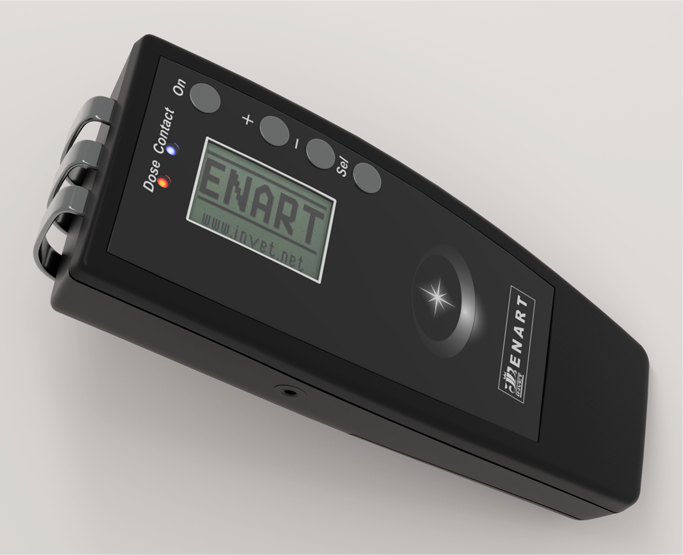
The ENART 911-L2 is a device for those who want to see and understand what’s happening during exercise.
One of its features is a liquid crystal display (LCD), which displays parameters, body reactions, and signal changes in real time.
ENART 911 Features:
- 18 operating modes – diagnostic, universal
- Flexible frequency settings
- Pulse parameter settings
- Dynamic search for priority zones
- Infra-low frequencies
- Quick mode for beginners (“QS” mode)
A key advantage of the ENART 911-L2 is the ability to store up to 20 individual parameter sets in its memory.
If you’ve found the optimal settings for a specific patient during therapy, they can be saved and loaded during the next session with just a few clicks of a button.
For professional use, this is a significant time saver.
This is especially important:
- for specialists
- for those who value precision
- for individual customization
- for saving your own methods
ENART 911 allows you to observe the dynamics of the reaction and adjust the impact during the process.
While the 907 is a reliable instrument, the 911 is a laboratory in a compact package.
Comparison of models
| Parameter | ENART 907-L2 | ENART 911-L2 |
| LCD display | No | Yes |
| Indication | Sound and light | Sound, light and visual (LCD) |
| Saving settings | No | Up to 20 parameter sets |
| Frequency adjustment flexibility | Fixed ranges | Freely adjustable |
| Suitable for beginners? | Yes | Yes (there is a Quick Start mode) |
| Suitable for experts? | Yes | Maximum |
In terms of basic capabilities, the devices are comparable.
The choice depends not on “power,” but on the level of control.
Which device is right for you?
Choose the ENART 907 if:
- you need a reliable working tool
- you don’t plan to delve deeply into setting up parameters
- you want simplicity and clarity from day one
- you plan to use the device at home for yourself and your family
- you value high-load resistance
Choose ENART 911 if:
- visual control of the body’s response is important to you
- you work with patients professionally and want maximum capabilities
- you want to maintain individual treatment patterns
- you plan to work with infra-low frequencies or a contactless mode
- you want a quick start mode for new patients
It’s important to understand
ENART helps the body activate its own self-regulation mechanisms.
The device records the reaction and adjusts the effects in response.
This is the principle of biofeedback.
A common question is: can I start with the ENART 907 and then upgrade to the ENART 911?
Many professionals start with the ENART 907 as a reliable and versatile tool, then upgrade to the ENART 911 for expanded capabilities and more flexible configuration.
These instruments are not interchangeable – they address different management needs and are effectively used in tandem.
Summary and my personal advice
Over the years of working with ENART devices, I’ve seen results in patients: pain reduction, improved sleep, recovery from injuries, reduced inflammation, and increased vitality. This isn’t magic – it’s physiology, supported by the ENART device.
Both models – ENART 907 and ENART 911 – are truly effective.
I work with both of them. The main thing to understand is that ENART doesn’t heal the body. It helps the body activate its own self-regulation mechanisms – to remember how to be healthy.
ENART 907 is the choice for those who value simplicity and reliability.
ENART 911 offers maximum control and advanced features for professionals.
Choose based on your goals, needs, and budget.
Both devices will be faithful assistants for many years to come.
Sincerely,
Dr. Linskyi